
Interior painting in Nashville is one of the quickest ways to make a room feel new. Fresh paint changes the light in a room, covers years of scuffs, and makes a house ready to live in or ready to sell. It also shows everything underneath it. A good paint job depends far more on the work done before the first coat than on the paint itself.
Salt and Cedar Home Remodeling is a locally owned remodeling company in Nashville. Kitchens are the core of what we do, and painting is part of finishing almost every room we work on. We also paint on its own: a single room, a whole floor, or the walls and trim after a repair. You have one point of contact from the first visit to the final walkthrough.
This page covers what we paint, why prep is most of the job, how to choose sheen and color, and how a painting job runs with us.
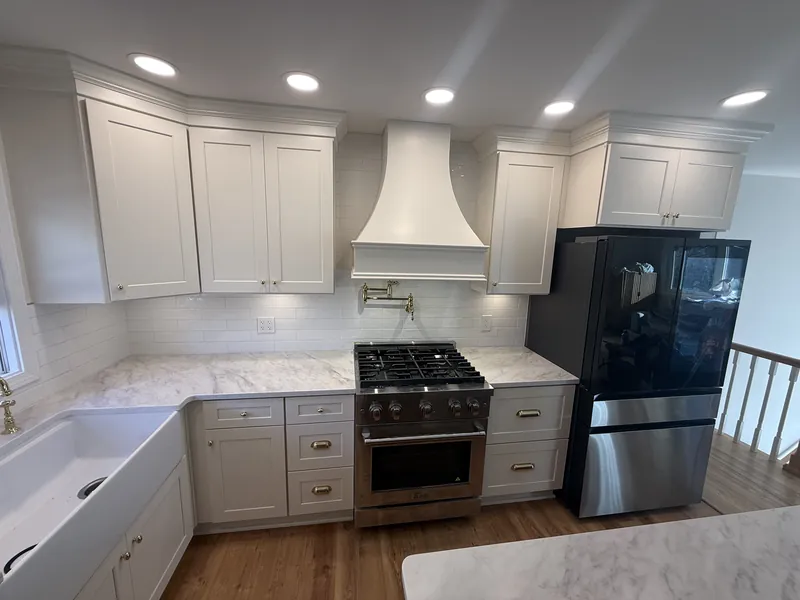
Walls and Ceilings
Walls take most of the paint in any room, and they take most of the wear. Hallways, stairways and kids' rooms pick up marks, nail holes and dents, and a wall that has been touched up over the years often shows patches that do not quite match. Repainting the whole wall, corner to corner, is what makes those spots disappear.
Ceilings are easy to forget until the walls are fresh and the ceiling looks gray next to them. Ceilings also show old water stains, which need a stain-blocking primer or they bleed back through new paint. We paint ceilings first, then walls, so any drips or overspray land on a surface that is about to be painted anyway.
Rooms that need extra care
Kitchens and bathrooms see steam, grease and splashes, so the walls there need cleaning before they are painted and a finish that can be scrubbed afterward. Stairwells and two-story rooms need ladders or planks set up safely. Rooms with dark colors going light, or light going dark, usually need a primer coat so the new color comes out true.
Trim and Doors
Baseboards, door casings, window trim and crown molding frame every room. Painted trim that is chipped, yellowed or covered in old drips makes fresh walls look unfinished. Trim takes more time per foot than walls, because every edge is cut in by hand and every nail hole and joint is filled.
Interior doors get the same care. Doors are cleaned, lightly sanded so the new paint grips, and painted with the hardware removed or covered. Panel doors are painted in a set order so the brush marks run the way the wood does.
If your trim is damaged or missing, or you want crown molding or new casings, read about our interior carpentry and trim work. New trim is installed, filled and caulked first, then painted with the room.
Prep Is Most of the Job
Good interior painters spend more time getting a room ready than they spend rolling paint. Here is what that prep looks like.
- Move and cover. Furniture is moved to the middle of the room or out of it, and floors and anything left in place are covered. Outlet and switch covers come off.
- Patch. Nail holes, dents and small cracks are filled and sanded flat. Larger damage, like a hole from a door handle or a water-damaged section, is a drywall repair job, and it gets fixed before any painting starts.
- Caulk. Gaps where trim meets the wall, and joints in the trim itself, are caulked so the line between them reads clean.
- Sand. Glossy surfaces are scuffed so new paint sticks, and rough spots from old drips are smoothed out.
- Prime stains and patches. Every patch and every stain gets primer. Unprimed patches soak up paint differently and show through as dull spots, called flashing.
- Cut lines. Edges along ceilings, corners and trim are cut in by brush before the walls are rolled, so the lines are straight without relying on tape alone.
Skipping any of these is how a paint job ends up peeling, showing patches, or wavy along the ceiling line. If you want a light added or moved while the room is empty, a licensed electrician does the new wiring before the walls are patched and painted.
Choosing Sheen and Color
Sheen
Sheen is how shiny the paint is when it dries. Flatter paint hides flaws in the wall, and shinier paint is easier to clean. Most homes use a few sheens for different surfaces:
- Flat or matte for ceilings. It hides small bumps and seams and keeps light from glaring overhead.
- Eggshell or satin for walls. These have a soft look and can be wiped down without marking.
- Semi-gloss for trim and doors. It stands up to hands, shoes and cleaning.
Kitchens and bathrooms need a scrubbable sheen on the walls. Grease and steam stain flat paint, and a satin or semi-gloss finish lets you wipe them away.
Color
A color chip under store lights is not a good guide to how a color will look on your wall. Put test samples on the wall, in a few places, and look at them in daylight and again in the evening. North-facing rooms make colors look cooler, and rooms with a lot of sun make them warmer. Look at the samples next to your floors, counters and trim, since those stay in the room with the paint.
How a Painting Job Runs With Us
It starts with a visit. We walk the rooms with you, look at the walls, ceilings and trim, and note any repairs needed before painting. We talk through sheen and color, and you get a free estimate that lays out the work.
On painting day, the room is prepped first: moved, covered, patched, caulked, sanded and primed. Then ceilings, walls and trim are painted in that order. Covers go back on, furniture goes back, and we walk the room with you before the job is called done.
Painting often goes with other work. If the room is part of a bigger change, read about kitchen remodeling. For a list of smaller fixes around the house, see our handyman services. When you are ready, tell us about the rooms you want painted.
Why Homeowners Call Us for Interior Painting
- One point of contact. We run the job from the first visit to the final walkthrough, so you are not passed between people.
- Repairs and paint together. Drywall patches and trim fixes are done first, so the paint goes on a sound surface.
- Prep comes first. Patching, caulking, sanding and priming are part of every job, not extras.
- Locally owned in Nashville. We serve Nashville, Brentwood, Franklin, Hendersonville, Mt. Juliet, Nolensville, Hermitage and Bellevue.